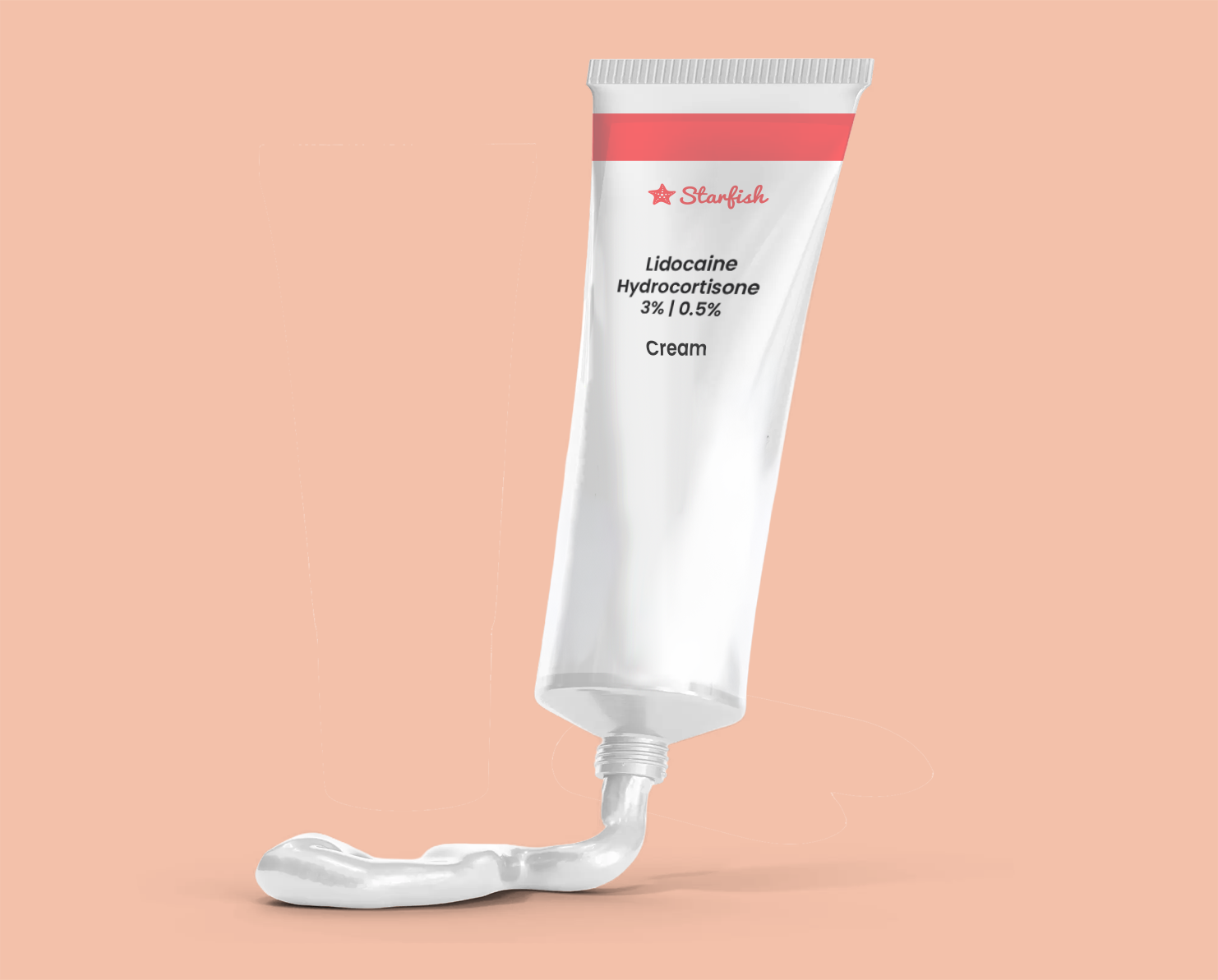
Lidocaine Hydrocortisone Rectal Cream Treatment Plan
Overview:
INSTRUCTIONS:
For treatment of hemorrhoids, you must use:
Lidocaine-Hydrocortisone rectal cream, which you are to apply rectally up to 3-4 times daily until symptoms resolve. This includes applying the medication after bowel movements and before bedtime for optimal relief.
- Lidocaine provides rapid, temporary numbing to reduce pain, burning, and itching
- Hydrocortisone decreases inflammation, swelling, and irritation in the anal canal.
This medication is used for symptomatic relief of internal or external hemorrhoids. It does not treat infections or correct structural hemorrhoid prolapse, but it significantly improves discomfort. Symptoms of hemorrhoids commonly include itching, burning, swelling, pain with bowel movements, and minor bleeding.
- Wash hands thoroughly before and after application.
- For external hemorrhoids: apply a small amount directly to the area.
- For internal hemorrhoids: use the provided applicator tip to insert the cream gently into the rectum as directed. (Clean the applicator thoroughly after each use).
IMPORTANT NOTES REGARDING YOUR TREATMENT:
- Do not exceed the recommended number of applications per day.
- Overuse of lidocaine-containing products can lead to toxicity.
- Prolonged steroid use may thin the skin or cause systemic absorption.
- Avoid straining during bowel movements.
- Use stool softeners, hydration, and fiber to reduce irritation.
- Maintain good anal hygiene.
- Warm sitz baths (10-15 minutes, 2-3 times daily) can provide relief.
- Avoid anal intercourse until symptoms have resolved.
- If symptoms worsen or do not improve within the expected timeframe, you may need an in-person examination to rule out other causes of rectal irritation or bleeding.
ACTIVE INGREDIENTS:
- Lidocaine
- Hydrocortisone
ALLERGIES:
- Lidocaine
- Hydrocortisone
- Prednisone
- Methylprednisolone
- Any corticosteroid medicine
- Any component in the cream base or applicator
- Other “-caine” anesthetics (benzocaine, tetracaine, prilocaine, bupivacaine)
CONDITIONS:
- Active rectal, anal, or intestinal infection
- Fungal, viral, or bacterial skin infections in the anal area
- Severe rectal bleeding
- Ulcerative colitis flare or Crohn’s flare
- Recent colorectal surgery
- Severe heart, liver, or kidney disease (may affect lidocaine metabolism)
- New numbness, tingling, or loss of sensation
PREGNANCY AND BREASTFEEDING:
Lidocaine–hydrocortisone rectal cream may be absorbed systemically, and the potential effects on fetal development are not fully known. Components of this medication may also be present in breast milk following topical or rectal use. Because corticosteroids and local anesthetics can carry risks when used during pregnancy or breastfeeding, a decision should be made whether to discontinue nursing or to discontinue the medication, taking into account the importance of the treatment to the mother. This determination should be made in consultation with your primary care physician.
EMERGENCY SIDE EFFECTS:
- Severe allergic reaction: breathing difficulty
- Rectal bleeding or black stools
- Fever, chills, worsening infection signs
- Extreme fatigue, weakness, sudden fainting
- Blistering, peeling, severe skin irritation
OTHER SIDE EFFECTS:
- Rapid swelling of treated area
- Sudden severe abdominal or rectal pain
- Unexpected mood changes or confusion
- Vision changes or eye discomfort
- Unusual weight gain or swelling
MEDICINES, SUPPLEMENTS, AND FOODS:
- HIV medications
- Birth control (all hormonal)
- Narcotic pain medications
- Anti-seizure medications
- Antipsychotic medications
ACCURATE INFORMATION:
We evaluate the specific health information you provide and make our recommendations based on it. If you incorrectly provide that information, we may misdiagnose or fail to diagnose conditions that you may have which could affect our recommendation for treatment.
TREATMENT FAILURE:
This treatment is not 100% effective. It may not work or may only partially resolve the condition for which you are seeking treatment. If it is an emergency, call 911 or seek immediate medical help in person.
MISDIAGNOSIS AND DELAYED DIAGNOSIS:
There is also a risk that we will misdiagnose or fail to diagnose conditions that you may have which could affect our recommendation for treatment. This risk exists with a doctor in person as well but they may have additional signs and symptoms to aid their evaluation. We use an evidence-based practice and guidelines as well as clinical decision support to try to minimize these risks.
ACCEPTING OR DECLINING OUR RECOMMENDATION:
We recommend this treatment because the potential benefits of treatment outweigh the risks. You should evaluate this information as well as the manufacturer’s pamphlet, and any input from your in-person healthcare team, or other information to decide if this treatment plan is appropriate for you. You are free to decline our treatment recommendations although, doing so may prolong symptoms and be associated with negative outcomes.
OTHER TREATMENTS:
We have based our recommendation on your specific case and medical guidelines, but there may be alternative treatments or strategies that may be helpful to you. Some may be more or less effective than what we provide. Some treatments may require an in-person exam or procedure which we can’t provide.
SHARE WITH YOUR IN-PERSON HEALTHCARE TEAM:
You can access your records anytime. We strongly recommend that you update your in-person doctor, pharmacist, and the rest of your healthcare team to let them know about any new medicines you are taking or other changes in your health.