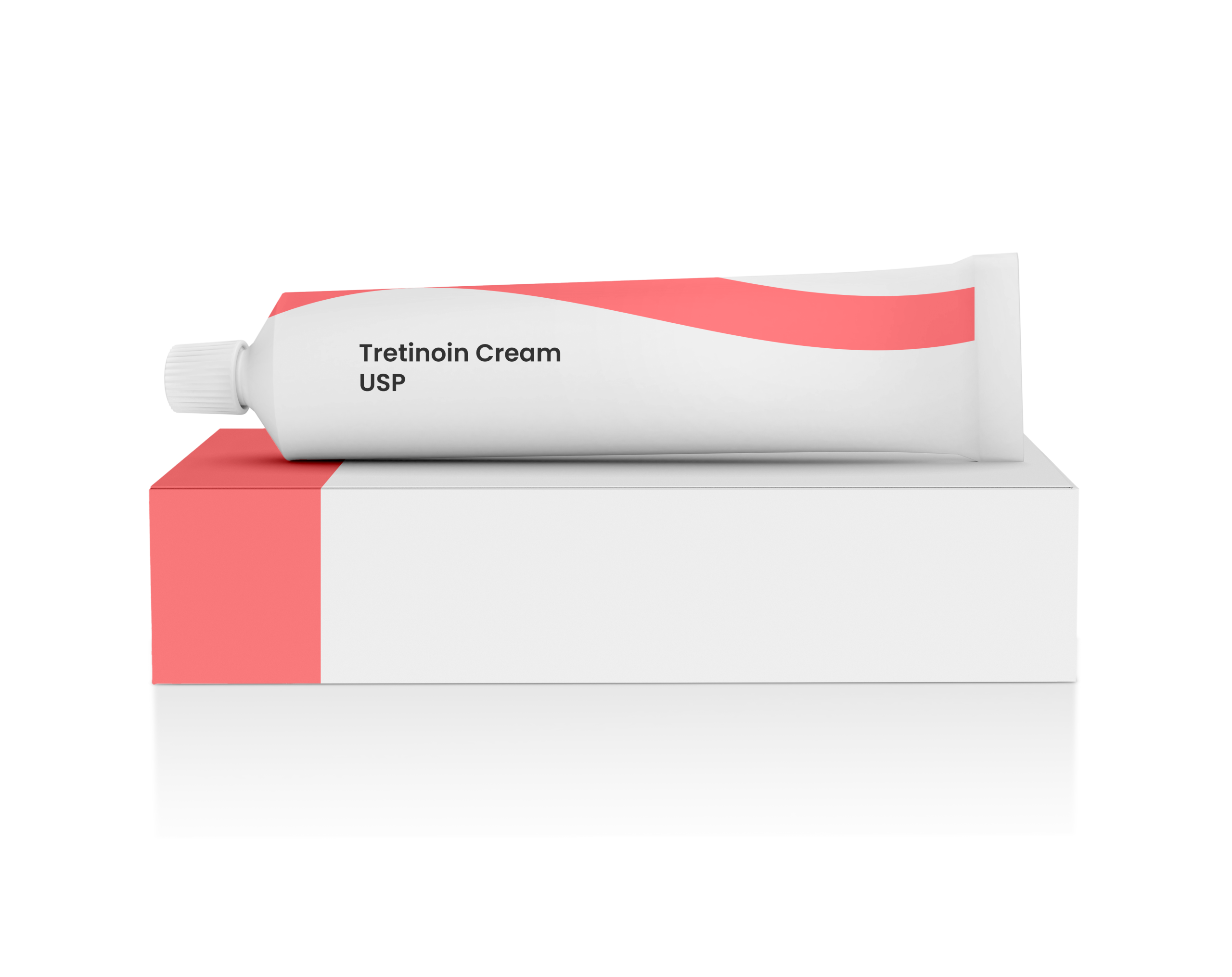
Tretinoin Cream
OVERVIEW:
This treatment plan outlines the application, dosage, expected results, and potential side effects of tretinoin cream for acne treatment. Please read this plan carefully, along with the manufacturer’s information provided with your medication, for complete details regarding precautions, drug interactions, and safety information.
Tretinoin is a prescription-strength topical retinoid used to treat acne and improve overall skin texture. It works by increasing skin cell turnover, preventing clogged pores, and reducing inflammation that contributes to breakouts.
Tretinoin does not provide overnight results. Consistent nightly use is essential for long-term improvement.
INSTRUCTIONS:
For treatment of acne, you have been prescribed:
Tretinoin cream, to be applied to the affected area(s) once daily at night.
Apply a pea-sized amount to clean, completely dry skin in a thin layer over the affected areas (not as a spot treatment). Avoid the eyes, corners of the nose, lips, and broken or irritated skin.
Allow skin to dry for 20-30 minutes after washing before applying tretinoin to reduce irritation.
Tretinoin works gradually. You may experience mild redness, dryness, peeling, or irritation during the first several weeks. Acne may appear to worsen initially (“purging”) before improvement occurs. Visible improvement typically begins after 6-12 weeks of consistent use.
IMPORTANT NOTES REGARDING YOUR TREATMENT:
- Daily sunscreen use (SPF 30 or higher) is required while using tretinoin, as it increases skin sensitivity to sunlight.
- Do not use more than prescribed. Applying extra product will not speed results and may increase irritation.
- Avoid waxing, harsh exfoliants, abrasive scrubs, and strong chemical peels while using tretinoin.
- Use gentle cleansers and moisturizers to minimize dryness.
- Avoid excessive sun exposure, tanning beds, and unprotected UV exposure.
- For your safety, do not use tretinoin if you are pregnant, planning pregnancy, or breastfeeding unless specifically discussed with your provider.
- If severe irritation, blistering, swelling, or crusting develops, stop the medication and seek medical advice.
ACTIVE INGREDIENTS:
This medicine contains the following active ingredients. If you are allergic to any of these components, similar components, or any of the other components listed in the manufacturer’s pamphlet, please do not take it.
- Clindamycin
ALLERGIES:
This medication may cause an allergic reaction if you are allergic to tretinoin or related retinoids. Stop this medication and seek medical care if you experience:
- Severe rash
- Swelling of the face or throat
- Difficulty breathing
- Intense burning or blistering
CONDITIONS:
We evaluate your health history and the information you provide; however, if anything changes or if one of the conditions below applies, stop the medicine and seek in-person care:
- Pregnancy or planned pregnancy
- Severe eczema or rosacea
- Significant skin barrier damage
- Active sunburn
- Unexplained severe skin reaction
SIDE EFFECTS:
Common (especially in first 4–8 weeks):
- Dryness
- Peeling / flaking
- Redness
- Burning or stinging sensation
- Skin tightness
- Increased sensitivity
Acne “Purging” Phase:
- Temporary increase in breakouts
- Brings clogged pores to the surface faster
- Usually lasts 2–6 weeks
ACCURATE INFORMATION:
We evaluate the specific health information you provide and make our recommendations based on it. If you incorrectly provide that information, we may misdiagnose or fail to diagnose conditions that you may have which could affect our recommendation for treatment.
TREATMENT FAILURE:
This treatment is not 100% effective. It may not work or may only partially resolve the condition for which you are seeking treatment. If it is an emergency, call 911 or seek immediate medical help in person.
MISDIAGNOSIS AND DELAYED DIAGNOSIS:
There is also a risk that we will misdiagnose or fail to diagnose conditions that you may have which could affect our recommendation for treatment. This risk exists with a doctor in person as well but they may have additional signs and symptoms to aid their evaluation. We use an evidence-based practice and guidelines as well as clinical decision support to try to minimize these risks.
ACCEPTING OR DECLINING OUR RECOMMENDATION:
We recommend this treatment because the potential benefits of treatment outweigh the risks. You should evaluate this information as well as the manufacturer’s pamphlet, and any input from your in-person healthcare team, or other information to decide if this treatment plan is appropriate for you. You are free to decline our treatment recommendations although, doing so may prolong symptoms and be associated with negative outcomes.
OTHER TREATMENTS:
We have based our recommendation on your specific case and medical guidelines, but there may be alternative treatments or strategies that may be helpful to you. Some may be more or less effective than what we provide. Some treatments may require an in-person exam or procedure which we can’t provide.
SHARE WITH YOUR IN-PERSON HEALTHCARE TEAM:
You can access your records anytime. We strongly recommend that you update your in-person doctor, pharmacist, and the rest of your healthcare team to let them know about any new medicines you are taking or other changes in your health.